I’ve got to tell you, gingerbread macarons have this sneaky way of taking over my December kitchen. I make a batch “just to test,” and next thing I know, I’m sinking into the warm spice aroma like it’s a holiday blanket. You know that cozy smell of cinnamon and ginger wafting through the house? That’s what gets me every single time.
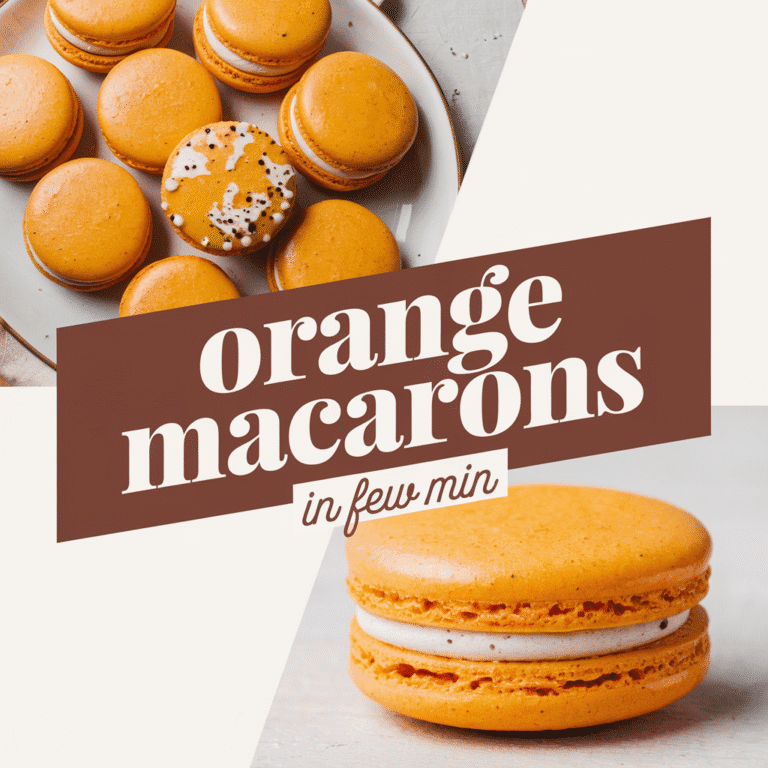
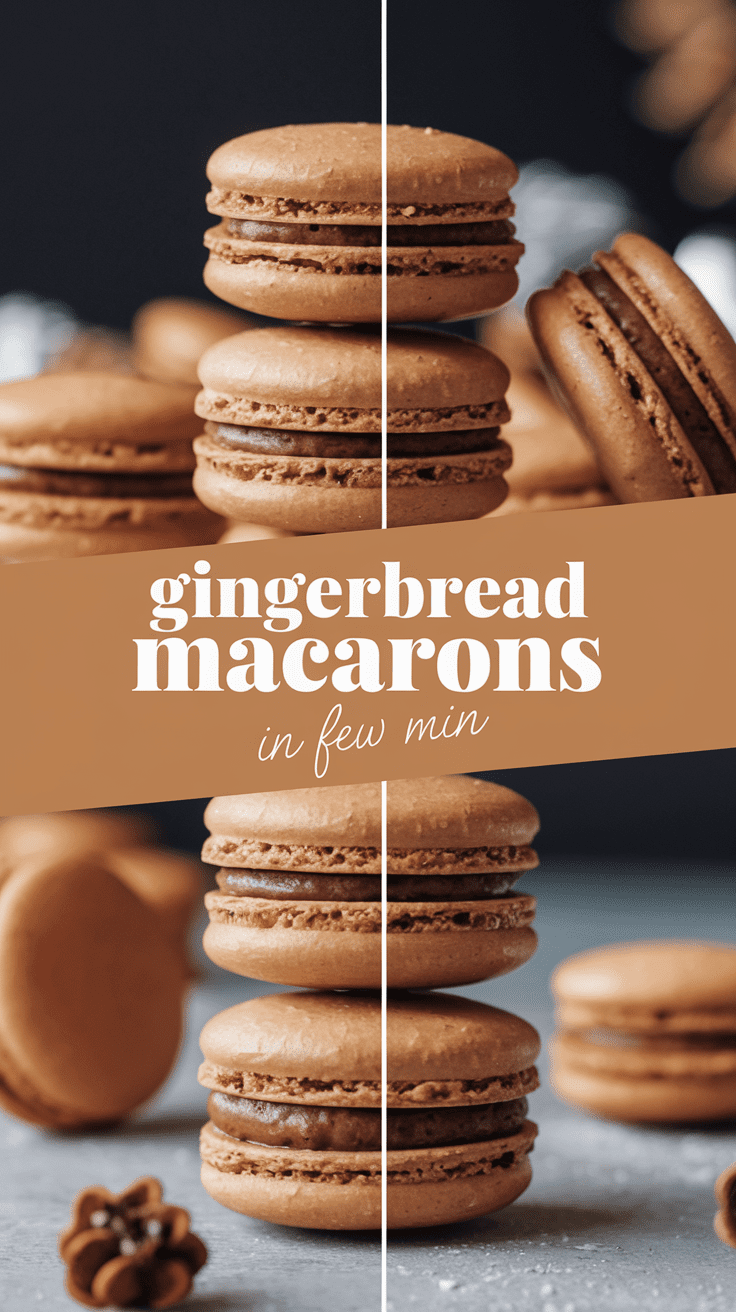
These gingerbread macarons blend the classic almond-based French shell with deep, wintery spices and a silky gingerbread-spiked buttercream. You get crisp edges, chewy centers, and a filling that tastes like Christmas melted into frosting. They feel fancy enough for gifting but still warm and nostalgic.
What makes these special is the harmony of flavors. You bite in and you get that gentle crackle, then the soft chew, then a wave of spiced sweetness. It’s like every good holiday flavor decided to show up at once.
Why You’ll Love This Recipe
- Big gingerbread flavor in a tiny, elegant cookie.
- Surprisingly doable even if you’re new to macarons.
- Warm spices that make your kitchen smell like a bakery.
- Customizable filling ideas so you can tailor the flavor to your mood.
- Perfect for gifting because they look impressive with minimal effort.
Tools You’ll Need
I want you to walk into this confidently, so here’s what each tool actually does.
- Mixing bowls. For the dry ingredients and the meringue.
- Kitchen scale. Macarons love precision. Grams give you that.
- Fine mesh sieve. Helps you get smooth, lump-free shells.
- Hand mixer or stand mixer. Whips the egg whites into a glossy meringue.
- Silicone spatula. Perfect for folding your batter without deflating it too fast.
- Piping bags + round piping tip (about ½ inch or 12 mm). Gives you neat, even circles.
- Baking sheets. Use two so heat distributes evenly.
- Silicone baking mat or parchment. Keeps your shells from sticking.
- Oven thermometer. Ovens lie. This keeps things honest.
Ingredients
(US and metric included)
For the Gingerbread Macaron Shells
- 1 cup almond flour (100 g)
- ¾ cup powdered sugar (90 g)
- 2 tsp ground ginger
- 1 tsp cinnamon
- ¼ tsp nutmeg
- ¼ tsp cloves
- 3 large egg whites, room temperature (about 90 g)
- ¼ cup granulated sugar (50 g)
- ½ tsp vanilla extract
- Optional. A drop of warm-brown gel food color
For the Gingerbread Buttercream Filling
- ½ cup unsalted butter, softened (113 g)
- 1 cup powdered sugar (120 g)
- 1 tbsp molasses (20 g)
- ½ tsp ground ginger
- ¼ tsp cinnamon
- 1–2 tsp heavy cream, only if you need to loosen the frosting
How to Make Gingerbread Macarons
1. Prep your baking sheets
Line two baking sheets with silicone mats or parchment. If you want perfectly identical circles, draw 1.5-inch guide circles on the back of your parchment.
2. Sift the dry ingredients
Add almond flour, powdered sugar, ginger, cinnamon, nutmeg, and cloves to a bowl. Sift it all together. If anything coarse is left in the sieve, toss it. Smooth shells start right here.
3. Whip the egg whites
Add your egg whites to a clean bowl. Whip on medium until foamy. Add the granulated sugar slowly. Increase speed and whip until you get stiff, glossy peaks. I always check by turning the whisk upside down. If the peak stands firm, you’re golden.
4. Add vanilla
Mix in the vanilla. Add food coloring if you want a warm gingerbread tone.
5. Fold in the dry mixture
Pour the dry mixture into the meringue. Start folding gently. Think slow and deliberate. Stop when the batter flows like thick lava and settles into a smooth ribbon. If you lift some with a spatula, it should fall slowly and disappear into the batter after about 10 seconds.
6. Pipe the shells
Transfer the batter to a piping bag fitted with a round tip. Pipe circles onto your mats. If they look slightly pointy on top, give the baking sheet a firm tap on the counter. This also pops air bubbles.
7. Rest the shells
Let the piped circles sit at room temperature for 25–60 minutes. You want them to form a dry skin on top. Touch one gently with your fingertip. If it doesn’t stick, they’re ready to bake.
8. Bake
Bake at 300°F (150°C) for 14–16 minutes. Check for doneness by gently nudging one shell. If it doesn’t wiggle, it’s ready. Let them cool fully before removing.
9. Make the buttercream
Beat the butter until fluffy. Add powdered sugar and mix until creamy. Add molasses, ginger, cinnamon and mix again. Add cream only if needed for smoothness.
10. Assemble
Pair up shells of the same size. Pipe buttercream onto one. Sandwich gently with the other.
11. Mature (optional but incredible)
Place in the fridge for 12–24 hours. The texture becomes softer, chewier, and more balanced.
Serving Ideas
- Sprinkle a little cinnamon sugar on the filling before closing the shell.
- Add a caramel drizzle on the plate for extra drama.
- Serve with hot cocoa or a gingerbread latte.
- Gift them in clear cookie boxes with twine to feel extra festive.
Variations and Customizations
- Swap buttercream for white chocolate ganache.
- Add orange zest to the filling for a citrus kick.
- Use brown butter in the frosting for deeper flavor.
- Add a tiny pinch of black pepper for a warming contrast.
Storage and Make-Ahead
- Store assembled macarons in the fridge for up to 5 days.
- Freeze unfilled shells for up to 2 months.
- Freeze filled macarons for up to 4 weeks, well sealed.
- Always bring them to room temperature before serving so the texture softens.
Pro Tips (Friend to Friend)
- Don’t skip the sieve. It makes all the difference in texture.
- If your batter spreads too fast, you’ve over-mixed. Add 5 minutes more rest time before baking to help the shells hold shape.
- If your shells crack, the oven is probably too hot. Drop the temperature slightly next time.
- If you see no feet, the batter might be too wet or under-mixed. Rest the shells longer.
- And my favorite secret. Always mature them overnight. They taste like you bought them from a real patisserie.
Yield and Time
- Yield. About 20–24 filled macarons
- Prep time. 35 minutes
- Rest time. 30–60 minutes
- Bake time. 14–16 minutes
- Total time. About 1 hour 30 minutes
Nutrition (per macaron, approx.)
- Calories. 115
- Fat. 6 g
- Carbs. 14 g
- Protein. 2 g
- Sugar. 12 g
If you make these gingerbread macarons, I’d seriously love to hear how they turn out. Share your tweaks, your photos or that moment when you bite into one and instantly feel the holiday magic. This recipe is one of my winter favorites and I hope it becomes one of yours too.
Gingerbread Macarons
4
servings35
minutes15
minutes115
kcalThese gingerbread macarons blend the classic almond-based French shell with deep, wintery spices and a silky gingerbread-spiked buttercream. You get crisp edges, chewy centers, and a filling that tastes like Christmas melted into frosting. They feel fancy enough for gifting but still warm and nostalgic.
Ingredients
For the Gingerbread Macaron Shells
1 cup almond flour (100 g)
¾ cup powdered sugar (90 g)
2 tsp ground ginger
1 tsp cinnamon
¼ tsp nutmeg
¼ tsp cloves
3 large egg whites, room temperature (about 90 g)
¼ cup granulated sugar (50 g)
½ tsp vanilla extract
Optional. A drop of warm-brown gel food color
For the Gingerbread Buttercream Filling
½ cup unsalted butter, softened (113 g)
1 cup powdered sugar (120 g)
1 tbsp molasses (20 g)
½ tsp ground ginger
¼ tsp cinnamon
1–2 tsp heavy cream, only if you need to loosen the frosting
Directions
- Prep your baking sheets
- Line two baking sheets with silicone mats or parchment. If you want perfectly identical circles, draw 1.5-inch guide circles on the back of your parchment.
- Sift the dry ingredients
- Add almond flour, powdered sugar, ginger, cinnamon, nutmeg, and cloves to a bowl. Sift it all together. If anything coarse is left in the sieve, toss it. Smooth shells start right here.
- Whip the egg whites
- Add your egg whites to a clean bowl. Whip on medium until foamy. Add the granulated sugar slowly. Increase speed and whip until you get stiff, glossy peaks. I always check by turning the whisk upside down. If the peak stands firm, you’re golden.
- Add vanilla
- Mix in the vanilla. Add food coloring if you want a warm gingerbread tone.
- Fold in the dry mixture
- Pour the dry mixture into the meringue. Start folding gently. Think slow and deliberate. Stop when the batter flows like thick lava and settles into a smooth ribbon. If you lift some with a spatula, it should fall slowly and disappear into the batter after about 10 seconds.
- Pipe the shells
- Transfer the batter to a piping bag fitted with a round tip. Pipe circles onto your mats. If they look slightly pointy on top, give the baking sheet a firm tap on the counter. This also pops air bubbles.
- Rest the shells
- Let the piped circles sit at room temperature for 25–60 minutes. You want them to form a dry skin on top. Touch one gently with your fingertip. If it doesn’t stick, they’re ready to bake.
- Bake
- Bake at 300°F (150°C) for 14–16 minutes. Check for doneness by gently nudging one shell. If it doesn’t wiggle, it’s ready. Let them cool fully before removing.
- Make the buttercream
- Beat the butter until fluffy. Add powdered sugar and mix until creamy. Add molasses, ginger, cinnamon and mix again. Add cream only if needed for smoothness.
- 10. Assemble
- Pair up shells of the same size. Pipe buttercream onto one. Sandwich gently with the other.
- 11. Mature (optional but incredible)
- Place in the fridge for 12–24 hours. The texture becomes softer, chewier, and more balanced.
Notes
- Don’t skip the sieve. It makes all the difference in texture.
If your batter spreads too fast, you’ve over-mixed. Add 5 minutes more rest time before baking to help the shells hold shape.
If your shells crack, the oven is probably too hot. Drop the temperature slightly next time.
If you see no feet, the batter might be too wet or under-mixed. Rest the shells longer.
And my favorite secret. Always mature them overnight. They taste like you bought them from a real patisserie.