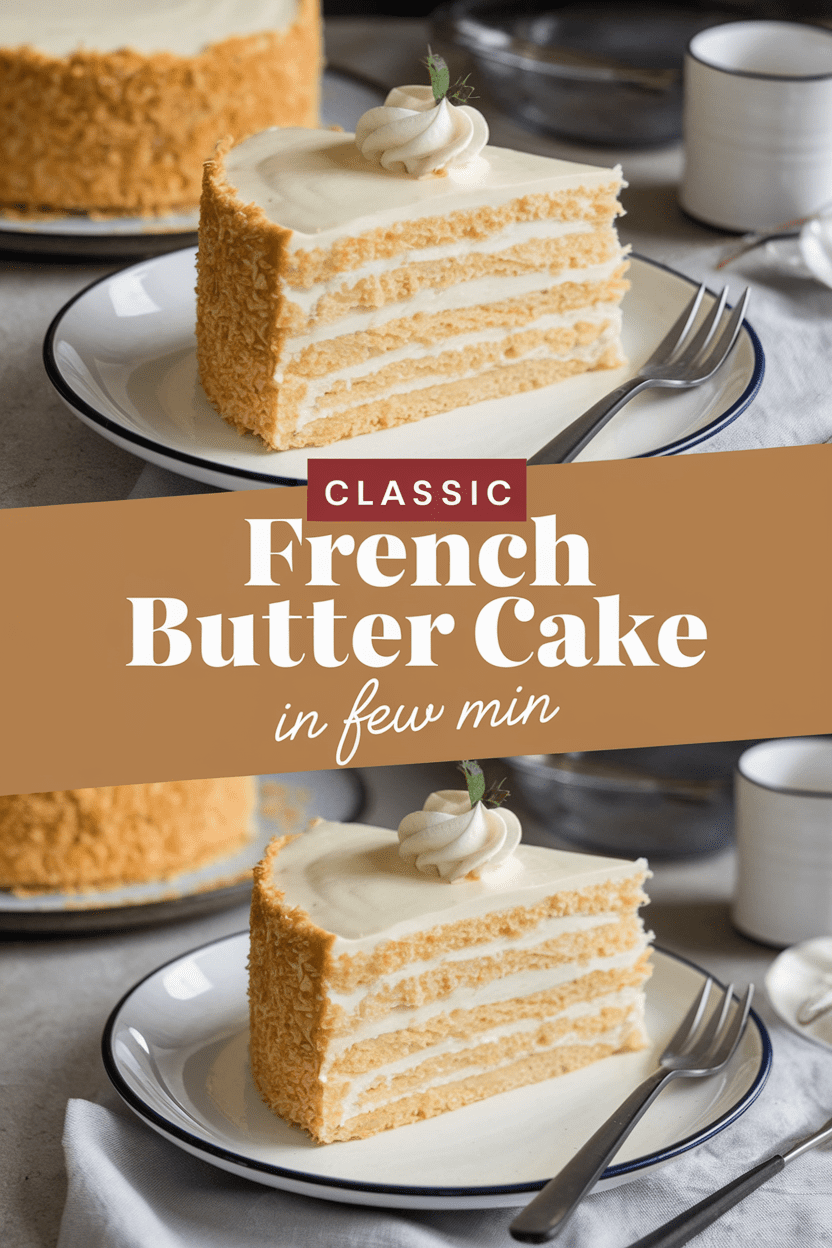
This classic French butter cake is rich, tender, and deeply buttery with a soft crumb that melts in the mouth. It is a simple yet elegant cake that relies on good ingredients and careful mixing rather than complicated techniques. The flavor is pure butter and vanilla with a gentle sweetness that feels timeless. This is an easy to moderate bake, and from start to finish it takes about 75 to 90 minutes.
Ingredients
For the cake batter
- 250 g unsalted butter, very soft
- 250 g caster sugar
- 4 large eggs, at room temperature
- 1 tsp vanilla extract
- 250 g plain flour
- 1 tsp baking powder
- 0.5 tsp fine salt
- 3 tbsp whole milk
For the tin
- Butter, for greasing
- Baking parchment, for lining
For finishing
- Icing sugar, for dusting
How to Make Classic French Butter Cake
Prepare the oven and tin
Preheat the oven to 170°C, or 150°C fan. Generously grease a 20 cm round cake tin and line the base with baking parchment. This cake is buttery and delicate, so good lining helps it release cleanly.
Cream the butter and sugar
Place the softened butter and caster sugar into a large mixing bowl. Beat with an electric mixer for 3 to 4 minutes until very pale, light, and fluffy. Take your time here, as this step gives the cake its fine texture.
Add the eggs
Beat the eggs lightly in a jug. Add them to the butter mixture a little at a time, mixing well after each addition. If the mixture looks like it may curdle, add a spoonful of flour and continue mixing gently.
Fold in the dry ingredients
Sift the flour, baking powder, and salt into the bowl. Using a spatula or the mixer on low speed, fold everything together just until combined. Add the milk and vanilla extract and mix briefly until the batter is smooth.
Bake the cake
Spoon the batter into the prepared tin and level the top. Bake for 45 to 50 minutes until the cake is golden, well risen, and a skewer inserted into the center comes out clean.
Cool before serving
Leave the cake to cool in the tin for 10 minutes, then turn it out onto a wire rack to cool completely. Dust lightly with icing sugar before serving.
Tips for the Best French Butter Cake
Why did my cake turn out dense?
This usually happens if the butter was not soft enough or if the mixture was overmixed after adding the flour. Always cream the butter well and fold gently at the final stage.
Can I use salted butter?
Yes, but reduce or omit the added salt. Salted butter can vary in saltiness, so taste matters here.
How do I know when it is fully baked?
The cake should be golden, slightly pulling away from the sides of the tin, and a skewer should come out clean. If the top browns too quickly, loosely cover with foil.
Can I add flavorings?
A little lemon zest or almond extract works beautifully, but keep it subtle so the butter flavor stays front and center.
Serving Suggestions
- Serve with fresh berries and lightly whipped cream
- Enjoy with coffee or tea in the afternoon
- Add a spoon of crème fraîche on the side for a French touch
Storage
Room temperature
Store the cake in an airtight container at room temperature for up to 3 days. Keep it away from direct heat.
Refrigerator
Refrigerate for up to 5 days, well wrapped. Bring to room temperature before serving for the best texture.
Freezing
Wrap the cooled cake tightly in cling film and foil. Freeze for up to 2 months. Thaw overnight at room temperature.
Nutrition
- Calories: 420 kcal
- Carbohydrates: 44 g
- Protein: 6 g
- Fat: 25 g
- Saturated fat: 15 g
- Sodium: 180 mg
Nutrition values are estimates and may vary based on ingredients used.
FAQs
What makes a French butter cake different?
It uses a higher proportion of butter and relies on careful creaming for structure rather than heavy leavening. The result is a finer, richer crumb.
Can I make this cake without a mixer?
Yes, but it will take more effort. Make sure the butter is extremely soft and beat vigorously by hand until pale and fluffy.
Can I bake this in a loaf tin?
Yes. Use a lined loaf tin and bake for about 55 to 60 minutes, checking for doneness.
Is this cake suitable for layering?
It can be sliced and filled, but it is best enjoyed as a simple single-layer cake so the buttery texture shines.
Mary Berry 3-Layer Victoria Sponge Recipe
Course: DessertCuisine: BritishDifficulty: Easy4
servings30
minutes40
minutes300
kcal1
hour10
minutesLight, fluffy Mary Berry 3-Layer Victoria Sponge filled with strawberry jam and freshly whipped cream. A classic British cake perfect for any occasion.
Ingredients
225g unsalted butter, softened
225g caster sugar
4 large eggs
225g self-raising flour
1 tsp baking powder
2 tbsp milk
150ml double cream
2 tbsp icing sugar
4–5 tbsp strawberry jam
Fresh strawberries, sliced
Icing sugar, for dusting
Butter, for greasing tins
Baking parchment
Directions
- Preheat oven to 180°C (160°C Fan). Grease and line three 8-inch round cake tins.
- Place butter, caster sugar, eggs, flour, baking powder and milk into a large bowl.
- Beat with an electric mixer for about 2 minutes until pale, smooth and fully combined.
- Divide evenly between tins and level the tops.
- Bake for 20–25 minutes until golden, springy and cooked through.
- Cool in tins for 5 minutes, then turn out onto a wire rack to cool completely.
- Whip double cream with icing sugar until soft peaks form.
- Sandwich the sponges with strawberry jam and whipped cream.
- Dust with icing sugar and decorate with fresh strawberries before serving.
Notes
- Ensure butter is fully softened for best rise.
- Do not open the oven door early to prevent sinking.
- Sponge layers can be frozen unfilled for up to 3 months.